
A big trip can feel exciting and intimidating at the same time.
You see the destination. You imagine yourself there. You think about the food, the photos, the people, the experiences, and the memories you could bring home.
Then the price shows up.
For many travelers, that is where the excitement turns into hesitation. Not because they do not want to go, but because paying for a major trip all at once can feel unrealistic.
The good news is that a big trip does not have to be paid for in one big move.
With the right plan, you can break the cost into smaller pieces, understand what is included, prepare for what is not included, and give yourself enough time to pay without feeling like the trip is sneaking up on you.
This guide will help you think through the real cost of a trip and create a budget that makes travel feel more manageable.
Start With the Full Trip Price, Not Just the Deposit
A deposit is what reserves your spot, but it is not the full cost of the trip.
That sounds obvious, but many travelers start with the deposit because it feels easier to focus on the smaller number first. The deposit matters, but your real budget should begin with the total trip price and the final payment deadline.
Before you book, write down:
- The full trip price
- The deposit amount
- The payment plan schedule
- The final payment deadline
- What is included in the package
- What is not included in the package
This gives you the clearest picture from the beginning.
If a trip is $3,000 and the deposit is $300, you are not budgeting for a $300 trip. You are budgeting for the remaining balance, plus the additional travel costs that may come later.
That does not mean you should be scared of the number. It means you should know the number early enough to plan for it.
Break the Trip Into Budget Categories
A trip budget is easier to manage when you separate it into categories.
Instead of thinking, “This trip costs too much,” break it down into the pieces that make up the experience.
Your categories may include:
- Trip package
- Flights
- Passport or visa costs
- Travel insurance
- Baggage fees
- Airport transportation
- Meals not included
- Optional excursions
- Tips
- Outfits and travel items
- Spending money
- Emergency cushion
Some costs are fixed. Others depend on how you travel.
For example, the trip package may have a set payment schedule. Flights may change depending on when you buy them. Spending money depends on your habits. Outfits and travel items can get expensive quickly if you do not set a limit.
Putting each cost into its own category helps you see where the money is going and where you can control it.
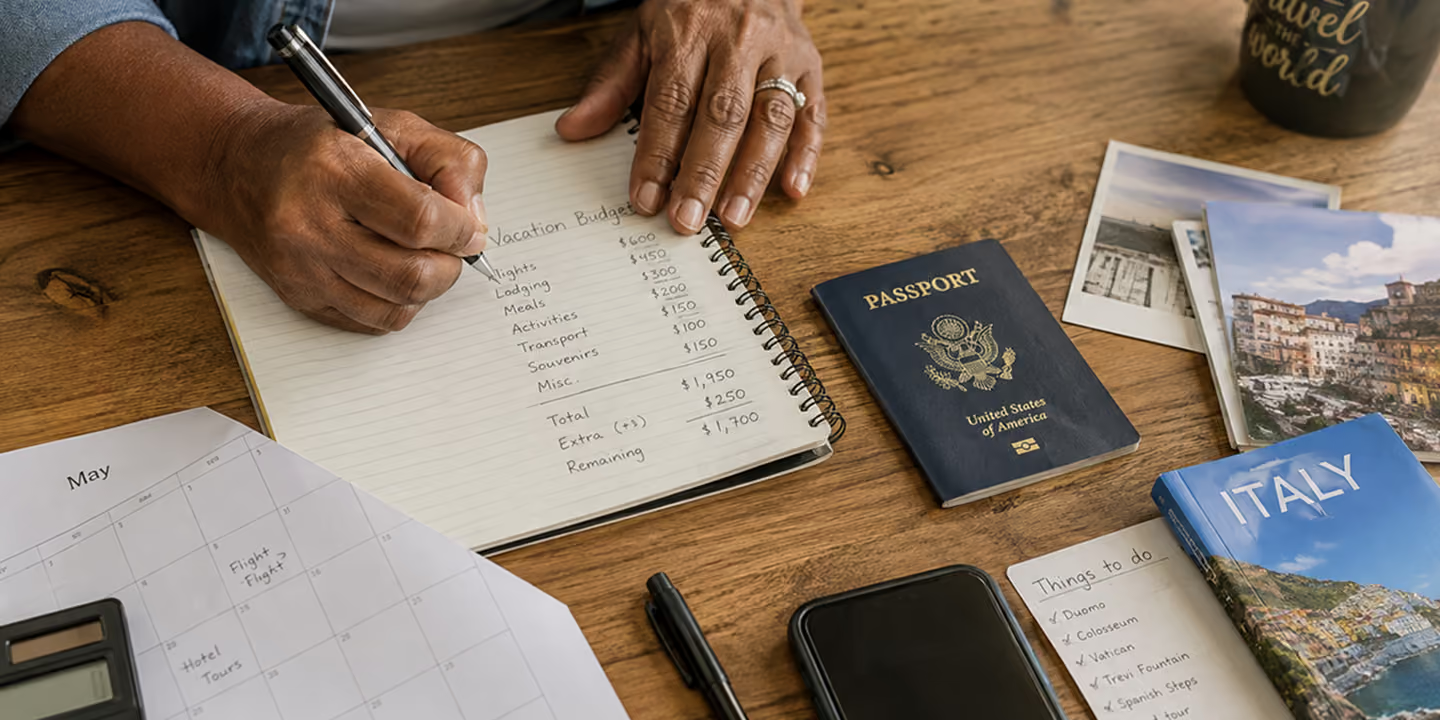
Use the Final Payment Date as Your Planning Anchor
The final payment date is one of the most important dates in your budget.
Once you know that deadline, work backward.
If you owe $2,400 after your deposit and you have 8 months until the final payment is due, you need to average $300 per month.
If you have 12 months, that same balance becomes $200 per month.
That is why booking early can make a big difference.
The trip may cost the same either way, but the monthly pressure feels different when you give yourself more time.
A simple way to look at it:
- Balance owed: $2,400
- Months until final payment: 8
- Monthly target: $300
Or:
- Balance owed: $2,400
- Months until final payment: 12
- Monthly target: $200
The earlier you plan, the more breathing room you give yourself.
Do Not Forget About Flights
Flights are one of the easiest costs to underestimate, especially when airfare is not included in the trip package.
Before you commit to a trip, get a rough idea of what flights usually cost from your home airport to the destination.
You do not need the exact price immediately, but you do need a realistic range.
If flights are usually $900 to $1,400, do not budget $500 because you hope you will find a deal. Give yourself a number that leaves room for reality.
Also remember that airfare can come with extra costs:
- Seat selection
- Checked bags
- Carry-on restrictions
- Flight changes
- Travel day meals
- Airport parking or rideshare
- Overnight hotel if your flight schedule requires it
Flights can change the full cost of the trip, so they need their own line in the budget.
Build a Spending Money Plan Before You Leave
Spending money is personal, but it should not be random.
Some travelers shop. Some eat light. Some buy gifts for everyone. Some want cocktails, room service, spa time, photos, extra activities, or souvenirs. None of that is wrong, but it needs a plan.
Think through what you may want to spend money on while you are there.
Common spending money categories include:
- Meals not included
- Snacks and drinks
- Souvenirs
- Local shopping
- Optional activities
- Tips
- Transportation during free time
- Spa or wellness services
- Personal extras
Then decide what kind of traveler you are.
If you know you love shopping, budget for it. If you know you like trying restaurants, give yourself room for that. If you rarely buy souvenirs, do not overbudget there.
A good trip budget should reflect how you actually travel, not how you wish you spent money.
Give Yourself a Cushion
Every trip needs a cushion.
This does not mean expecting something to go wrong. It means giving yourself room for normal travel surprises.
A cushion can help with:
- A higher-than-expected rideshare
- Extra baggage
- A last-minute medication or personal item
- Tips you forgot to budget for
- A meal that costs more than expected
- A small emergency
- A change in your return travel timing
Even an extra $200 to $300 set aside can make a difference.
When you travel with no cushion, every unexpected cost feels stressful. When you plan for a cushion, you can handle small surprises without feeling like they ruined the budget.
Be Honest About Pre-Trip Shopping
This is where many people overspend before they ever get on the plane.
The trip gets close, and suddenly everything feels necessary.
New luggage. New outfits. New shoes. New swimsuits. New accessories. New skincare. New travel-size everything.
Some purchases may be useful. Others are just excitement in disguise.
Before you buy, separate wants from needs.
You may need:
- Comfortable walking shoes
- Weather-appropriate clothing
- A good carry-on or checked bag
- Travel-size toiletries
- A portable charger
- Medication or personal care items
- A passport holder or document pouch
You may not need five brand-new outfits for every day of the trip.
Give yourself a pre-trip shopping budget and stick to it. The goal is to enjoy the destination, not spend half your travel money before you leave.
Use Separate Savings Buckets
One of the easiest ways to stay organized is to separate your money by purpose.
You can do this with different bank account buckets, envelopes, a spreadsheet, a notes app, or a simple written tracker.
The point is to avoid mixing everything together.
Example savings buckets:
- Trip balance
- Flight fund
- Spending money
- Travel insurance
- Pre-trip shopping
- Emergency cushion
This helps you avoid thinking you are more prepared than you are.
For example, you may have $800 saved, but if all of that is supposed to go toward your final payment, you still need separate money for flights and spending.
Buckets make the budget more honest.
Plan Around Your Real Pay Schedule
A budget only works if it matches your real life.
If you get paid weekly, break the trip into weekly savings goals.
If you get paid twice a month, set money aside every payday.
If your income changes from month to month, build a lower baseline and add extra when you can.
The goal is not to create a perfect budget. The goal is to create one you will actually follow.
For example:
- If your monthly goal is $300, you could save $150 per paycheck if you are paid twice a month.
- If your monthly goal is $200, you could save $50 per week.
- If your income is inconsistent, you may set a minimum monthly goal and add more during stronger months.
The best travel budget is not always the most aggressive one. It is the one that keeps you moving without creating unnecessary stress.
Watch the Small Leaks
Small spending habits can quietly take money away from your trip.
That does not mean you have to stop enjoying your life. It just means you should know where your money is going.
A few common money leaks:
- Food delivery
- Random online shopping
- Extra subscriptions
- Impulse beauty purchases
- Last-minute convenience spending
- Daily coffee or snacks
- Buying items “just in case”
If you are serious about a trip, choose one or two areas to tighten temporarily.
You do not need to cut everything. You just need to redirect enough money to support the travel goal.
Even $25 a week becomes $100 a month. Over 8 months, that is $800 toward your trip.
Small decisions add up when they have a destination attached to them.
Know When the Trip Is Not the Right Fit Yet
Sometimes the most responsible decision is not “never.”
It is “not this one.”
If the payment schedule feels too tight, flights are higher than expected, or the trip would require you to ignore other financial responsibilities, it may be better to wait for a future departure.
That does not mean the trip is out of reach forever.
It may mean you need more time, a different destination, a longer payment window, or a smaller trip first.
Travel should stretch you in a good way. It should not put you in a position where you come home stressed, behind, or full of regret.
A smart traveler knows when to say yes and when to plan for the next opportunity.
A Simple Trip Budget Example
Here is a simple way to think about it.
Trip package:
$3,000
Deposit paid:
$300
Remaining balance:
$2,700
Months until final payment:
9
Monthly payment target:
$300
Estimated flight:
$1,000
Spending money goal:
$600
Travel insurance and extras:
$250
Pre-trip shopping limit:
$300
Emergency cushion:
$250
In this example, the trip is not just $3,000. The fuller budget is closer to $5,400.
That number may feel bigger at first, but it is better to see it early than to be surprised later.
Once you know the real number, you can decide how to save, when to buy your flight, how much to set aside each payday, and what to limit before the trip.
Make the Budget Feel Motivating
Budgeting for travel should not feel like punishment.
It should feel like you are building toward something.
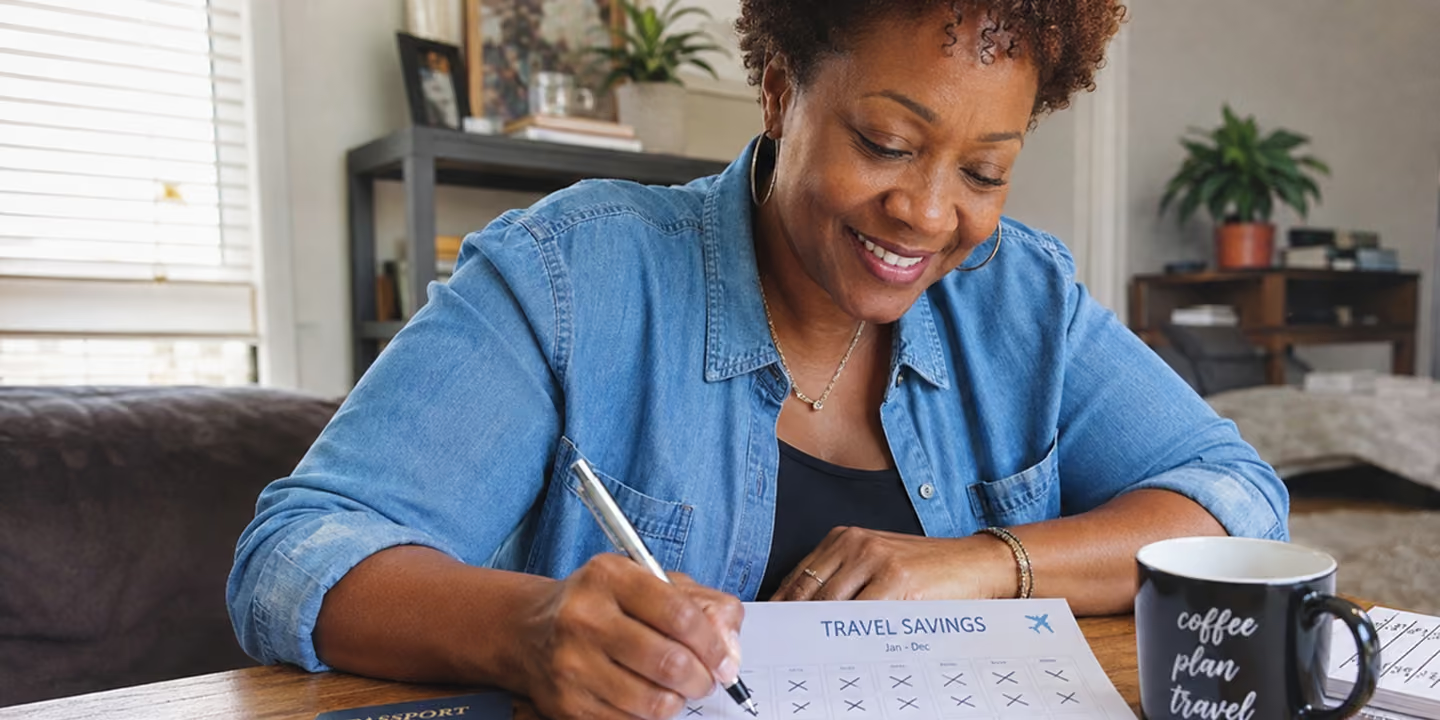
Put the destination on your calendar. Save a photo of the place you are visiting. Track your progress visually. Celebrate when you hit payment milestones. Remind yourself that every payment gets you closer to the experience.
You are not just paying a balance.
You are paying toward the moment you walk into the hotel, meet the group, see the view, take the photo, taste the food, and realize you actually made it happen.
Final Thoughts
A big trip becomes less overwhelming when you stop treating it like one giant payment.
Break it down.
Know the full cost. Understand what is included. Plan for flights. Set spending money aside. Give yourself a cushion. Be honest about shopping. Use your payment schedule as a guide.
The earlier you start, the easier the trip becomes to manage.
You may not be able to pay for everything today, and that is okay.
A strong travel budget gives you a plan, a pace, and a path forward.
That is how a big trip starts to feel possible.